Postingan

Menampilkan postingan dengan label network security

An Update on Android TLS Adoption

Gambar
Posted by Bram BonnĂ©, Senior Software Engineer, Android Platform Security & Chad Brubaker, Staff Software Engineer, Android Platform Security Android is committed to keeping users, their devices, and their data safe. One of the ways that we keep data safe is by protecting network traffic that enters or leaves an Android device with Transport Layer Security (TLS). Android 7 (API level 24) introduced the Network Security Configuration in 2016, allowing app developers to configure the network security policy for their app through a declarative configuration file. To ensure apps are safe, apps targeting Android 9 (API level 28) or higher automatically have a policy set by default that prevents unencrypted traffic for every domain. Today, we’re happy to announce that 80% of Android apps are encrypting traffic by default. The percentage is even greater for apps targeting Android 9 and higher, with 90% of them encrypting traffic by default. Percentage of apps that block cleartext by de...
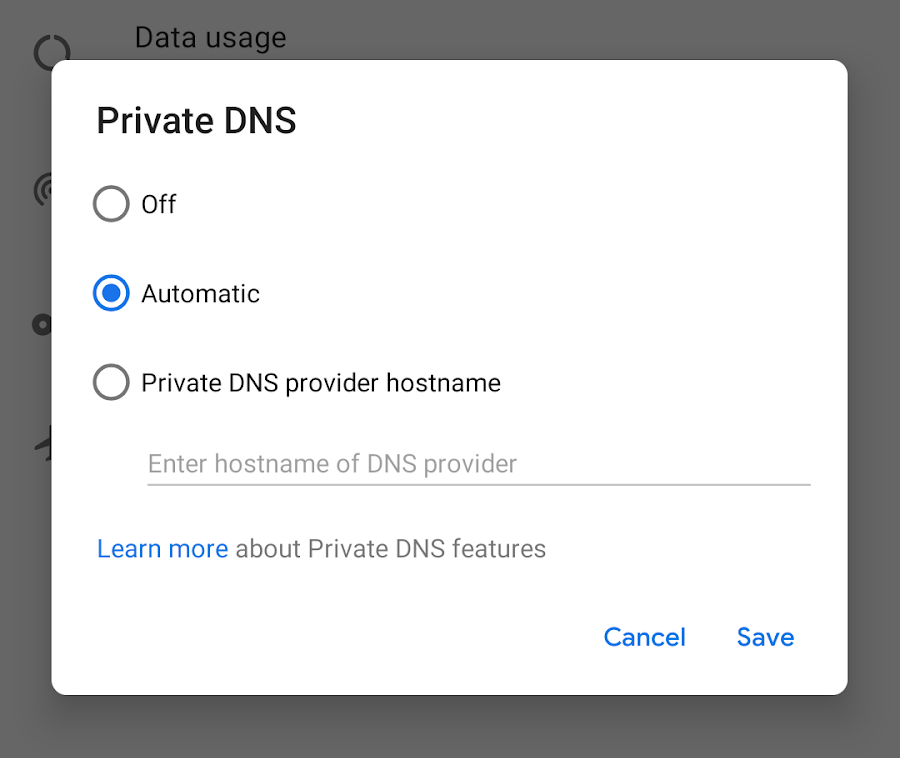
DNS over TLS support in Android P Developer Preview

Gambar
Posted by Erik Kline, Android software engineer, and Ben Schwartz, Jigsaw software engineer The first step of almost every connection on the internet is a DNS query. A client, such as a smartphone, typically uses a DNS server provided by the Wi-Fi or cellular network. The client asks this DNS server to convert a domain name, like www.google.com , into an IP address, like 2607:f8b0:4006:80e::2004 . Once the client has the IP address, it can connect to its intended destination. When the DNS protocol was designed in the 1980s, the internet was a much smaller, simpler place. For the past few years, the Internet Engineering Task Force ( IETF ) has worked to define a new DNS protocol that provides users with the latest protections for security and privacy. The protocol is called "DNS over TLS" (standardized as RFC 7858 ). Like HTTPS, DNS over TLS uses the TLS protocol to establish a secure channel to the server. Once the secure channel is established, DNS queries and responses ca...

Protecting users with TLS by default in Android P

Posted by Chad Brubaker, Senior Software Engineer Android Security Android is committed to keeping users, their devices, and their data safe. One of the ways that we keep data safe is by protecting all data that enters or leaves an Android device with Transport Layer Security (TLS) in transit. As we announced in our Android P developer preview, we're further improving these protections by preventing apps that target Android P from allowing unencrypted connections by default. This follows a variety of changes we've made over the years to better protect Android users.To prevent accidental unencrypted connections, we introduced the android:usesCleartextTraffic manifest attribute in Android Marshmallow. In Android Nougat, we extended that attribute by creating the Network Security Config feature, which allows apps to indicate that they do not intend to send network traffic without encryption. In Android Nougat and Oreo, we still allowed cleartext connections. How do I update my ...